Loving someone who never was

I was definitely miscarrying. The bleeding took hold properly on my birthday, as if to underline the point. 42 years for me: none at all for the tiny life ending within me. 

Who gets accidentally pregnant in their forties? Me, it turns out. A teenager still, despite the wrinkles. Taking my love for unlooked-for gifts to extremes.

It is a strange pain to lose an unplanned child. You do not feel, lol, legitimate in your grief. This is not the much-hoped-for baby of a couple who long to conceive. This is something out of leftfield, a blow you never saw coming.

It would have been ridiculously tough to have had that baby. Not just for me and for their father, but also for the beloved people who hold up my life, who already carry a lot on my behalf. The timing sucked. I felt the shame of the circumstances like a slap, and I was so, so afraid for the future. But I was ready to love whoever that child was, like nothing else. Fiercely and forever, with claws and teeth. 

If only that could have been enough. It wasn’t. So many important things were not in place. As I was wrestling with what to do, the little life chose to leave me, like a kind ex that knows it should be over and sets you free. My not-to-be-baby saved me so much struggle. But the price was losing them. 

It has been a silent, stitch-mouthed sort of loss. Afraid of being on my own, scared of the impact on my life, the lives of my loved ones, I kept the pregnancy and its end to myself, as much as I could. I was forgetting that secrets sever you from others. When braveface becomes a mask you can’t take off, you’re trapped where no one can see you. 

It has been one of the loneliest experiences of my life. After the hospital appointment that confirmed yes, the pregnancy was over, I got back to my dark, empty flat and fell apart. I crawled along the floor like a dog and curled up around the pain. No-one was there, entirely because of my wonky choices. The part of me convinced I deserve all my sorrows was crowing like a rooster. My body didn’t care, it just hurt and hurt and hurt. I have never wanted to be held more in my life.  

It would be far easier to pretend none of this happened, that last summer was just like any other, that my birthdays will be just as they always were. But this is cheap, fake comfort. It is not the truth. If I say nothing, I feed the silence that surrounds this experience, the blood and the pain of it, the desperate, dashed hopes. And that small life disappears all over again, as I hide the fact they ever existed. 

Instead, I have to write. Lay what wasn’t to be my child to rest here, among the words. So that it is set down. There could have been someone new, someone I would have loved for the rest of my life. I feel them in flashes: their soft hair under my chin, their tiny fingers splayed against my cheek, their warm weight over my shoulder. That specific, crazy miracle, a human unlike any other. No-one needs to care but me; this is just how I remember, and I will always remember. 

Here, I can say – little lost one, you are safe now. As small, as secret as you were, you were mine, and nothing can take that away. I will carry you with me always. The tiny seed of light, planted at the very centre of my heart. 
A votive candle

Passage des Sorcières

You see him, the tall, slightly stooped figure, head a little bowed, hair hanging to his shoulders, going ahead into the market square. Framed by the alley, he is a dark shadow in the bright spring day. The May light is like a blade; you feel it, slicing over the Dordogne town, down into your bones. 

The street sign has made you smirk, take a tourist’s picture on your phone. You know it means sorcerers’ alleyway, but come on, anything with the word ‘passage’ in it is funny, it just is. And up ahead, walking along it, is your teacher, your friend, the one who conjures with words, whose stories unfold like spells. You should catch him up, fall into step at his side, this Sunday after a week in his company. 

You don’t. Some awkwardness drags at you, makes you hang back. You let him carry on, into the square, into the crowd, this tall spear of a man. He that goes before. 

What you don’t know, watching him disappear, is that there will never be another moment in which you can hurry after him. Your last chance is whisked away, without you noticing. Only later, months later, do you realise that fate has pulled a magician’s trick. You were looking the wrong way, and poof. He is gone. 

That is the way, with last times. The lastness of them lurks, invisible, waiting. The rings seem solid, the egg real, the cards unmarked. Life’s sleight-of-hand is good at making you believe your eyes. Until the secret trapdoor falls and what was right there, in plain sight, vanishes. 

You cannot know then that the news of his death will find you, at your work, one dull afternoon in early winter. That night you will not want to go to sleep, because you do not want to wake in a world without him in it. 

And yet, somehow, that night passes. More nights follow, one after each other, until it is a year later. Leaves fall again, leaves which budded and unfurled and drank the light and then began to die, all without his eyes to see them. 

You are haunted by the feeling of lostness, a wrong turn, a fingernail-snag moment when, if you had just been quicker… No. There is nothing for it but to keep stumbling on, always behind. You reach up to where the words come from, where you feel he must be. You scratch and pick at your work, scraping for flecks that feel true.

In the alleyway of your life, you are often in that memory again, dawdling in the beautiful light. The sorcerer has passed. You can never catch him up. Your steps are slow, bad-dream slow. It doesn’t matter: you won’t stop taking them, one after another, all the days you have left. It is thanks to him, after all, that you know the way to go.

Mudlarking


IMG_8914

The river has a gift for us today. It has fallen back so deeply, the low tide so low, that the whole shoreline is laid bare, calling to us.

I don’t know why we decided to come this way this afternoon, our daily walk breaking free of its usual tight turns of the park. Her hand in mine, we’ve drifted down the middle of the empty roads, hopped on and off pavements, dodged joggers, to end up here, our invisible bubble of space popping against the river’s edge.

We’re where Black Lion Lane runs right out into the Thames. No wall, just a gap, an alley of thin air. Across it, a set of steps, a few up, then down, right into the river. Usually the brown water is three steps from the top; the river swirls wide and fast and greedy here, curving up to Hammersmith bridge. But today, it is sunk to a ribbon. The steps lead all the way down. At the bottom, brick squares make a pathway to the shingle.

She tugs my hand. ‘C’mon, Mum!’

The steps are slick with grey mud trodden up by others. ‘Stick to the side, look,’ I tell her. We strike out onto the brick patches, wobbling across the sludge. The river-smell is thick here, all salt and mud and dirty knickers. When we’re onto dry pebbles, the wind catches us. The clouds are whipped huge overhead, the sunlight feels astringent. After the past few weeks, the space hits us like a hey presto, like a huge glass cloche, lifting off.

The shingle is deep, gives underfoot. We crunch over treasures. Clam shells, river glass, really good skimming stones. Someone has heaped bricks in formations on the river bed. There are mounds of metal things, rusted together. A cairn of beer bottle shards. My girl wonders if everything is either Roman or Victorian. She points to the opposite bank. Made small by the distance, there’s a man waving a metal detector along the water’s edge.

‘It’s called mudlarking,’ I say. ‘You can get a special license to do it.’

‘Is this Victorian?’ she asks.

It’s a small chunk of pottery, a piece of plate, broken off from the edge. Blue and whitish, pattern made vague by the water.

‘No,’ I say, smiling. ‘It’s a bit like one my Nanna used to have.’

Not exactly heirloom stuff. Nanna would have bought it in the late forties, after the move to Kent. After the bomb had smashed whatever crockery she’d had in Upton Avenue. Everything made rubble, the house fallen around her, her father under it. She’d left East Ham with my small uncle in tow, not looking back. Her London was exactly diametric to ours. You’d see it if you pressed the map in half. Great grandmother and great granddaughter: two girls, two lives, opposite sides of the city, a century apart. On the same overlapping spot. A vivid fleck of blood, transferred across generations.

I take pictures on my phone, as we turn and face the wind, walking up towards Hammersmith. Lately I’ve become obsessed with photographing the sky. As if reminding myself there’s an up; somewhere limitless. A way out.

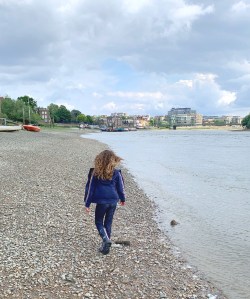
She’s raced on ahead, my daughter, the plate-bit in her pocket. While I’ve not been looking, she’s undone her hair, and her ringlets lash in the wind. Her legs have grown stalky over the tops of her wellies. I take a photo of her, kicking along the very edge of the water, dancing where it ripples. When you realize your baby is a mermaid-hair gangle-shanks, I think, ridiculously, in Instagram captionese.

In this cloistered spring, this time trapped apart, at the river’s lowest ebb, everything looms oddly, the perspective all out. The bridge ahead looks tiny. The people on the Thames path are toy soldiers on a battlement. And my little girl is suddenly writ large. Herself, only – more so.

She’s always surprising, always unexpected, this gift of mine. Now she’s off, running full pelt, the distance all hers. I follow behind, feet careful on the shifting pebbles, watching her surge headlong into the day.

Taking it personally

Warsaw Shire
How it hurts, this June.

This June, that carelessly ripens into high summer. In which we take tentative, twitchy steps over the scuffed grass, towards some of the things we did without thinking, back in February. Slowly, the weeks of April and May, all lemon-sherbet light and deaths in the thousands, get further behind us.

‘Where does it hurt?’ asks Warsan Shire, of the world, in her poem ‘what they did yesterday afternoon’. The answer comes: ‘Everywhere / Everywhere / Everywhere.’

I’d wanted to write about us all being cornered by this pandemic. (Pandemic: all people, everywhere.) About how, as the viral tsunami struck, every one of us had to pray that our human bodies, our fragile little boats, do not capsize. But, as The Atlantic argues, coronavirus has been far from being the ‘great leveller’ it should have been.

Instead it’s exposed the fault lines of injustice, the structural unfairness of our world. In countries like the UK, when freedoms are lost, they are not lost equally. You see it as lockdown restrictions lift, the protective measures loosened: not everyone has had the privilege of keeping safe.

The virus has had a disproportionate impact on communities of colour, who find themselves more exposed to it, overrepresented in the workforce that has cared for the sick and kept the country fed and functioning. And who are more likely to suffer serious illness and die; up to twice as likely for a black British male than his white counterpart. A Public Health England report leaked to the BBC has found that historic experiences of racism and unequal access to healthcare may well have had a fatal impact.

Last month, in Minneapolis, as people around the world fought to breathe because of Covid, a white police officer suffocated George Floyd to death by kneeling on his neck. Another black life ended by an act of pitiless white violence, in a long, disgusting history of pitiless white violence.

This June hurts in the skin.

We are all born innocent, into a world that is anything but. The webs of power we’re delivered into exert real, lifelong forces. The pain is sewn in; but the stitches pull unfairly. Black lives matter. That this truth needs to be a rallying cry shows how far there is to go.

When it comes to race, rage and fear are never far away. We take race personally. We have to: it’s one of the most personal things about us. And yet, it’s something we’re handed. Our race is not a choice; it’s never our fault. But there are systemic, unforgivable faults in how our racist societies work, with long, murderous shadows behind them. It is past time for change.

People reading this with my weak-tea coloured skin, so-called ‘white’ – you need to put down the ‘All lives matter’ hashtag and realise something. You’re the bad guy. Yep. You. (And me). You come from a long line of the worst kind of bad guys: the ones that told themselves – and the world – that all their stealing, murdering, slaving and profiteering were for good. Your forefathers were historical gaslighters, who pushed the shame of their atrocities onto the humans they hurt, who created a bullshit system that denied people their humanity based on the colour of their skin.

Whiteness needs to burn with shame. Its false innocence, its perverse amnesia, need to be toppled, thrown into the river with the statue of Edward Colston. White British people like me need to feel it, every day, the sin we inherit with our skin colour. Feel the claustrophobic truth: this is embodied, this culpability. You cannot peel it off, put it to one side. It is not invisible, it is not optional. There are no special exceptions. Take. It. Personally.

And then help take it apart. It’s on all of us to dismantle racist structures and attitudes: what the author NK Jemisin calls ‘lots of little biases at many points, forming a big Racist Voltron.’

Ideology is invisible. It’s like trying to see the inside of your own eyes. You don’t know what you don’t know.  Begin seeking anyway. I’m made of books: below are some I’ve learned from. It’s no-one’s responsibility but mine, to begin to try to fill in my own blanks. It is a lifetime quest. It needs to start earlier. This petition calls for balanced British history to be taught in schools. Sign it. Get behind the efforts of The Black Curriculum. Our children deserve nothing less than the truth.

The writer in me knows that stories might just save us. Ever since we first gathered around the firelight, the night at our backs, weaving with our words, they have brought us together. Listening to them, telling them: this is soul transfusion; this is where understanding begins. When we are lifted out of ourselves. When we are humbled. When we give each other shining gifts, share the madness and grace of what it means to be human.

People’s experiences, all too often their fortunes and life chances, are unfairly shaped by their race. This must change. Then we’ll get to the other truth. Every one of us aches, deeply, with the knowledge that we are so much more than what the world sees of us. Our minds, our souls, are moths trapped within a lantern, crazed with longing, desperate to be free.

‘We are all visitors to this country called life,’ writes Ursula Le Guin. Our stay here is short. Don’t waste it. It must never stop, the effort to make things better, for everyone netted in this place, in this time, no matter how huge or hopeless a task it seems. Take it personally.

Reading

Brit(ish), Afua Hirsch

Dear Ijeawele, Chimamanda Ngozi Adichie

Feel Free, Zadie Smith

I will not be erased, gal-dem

Natives, Akala

Notes of a Native Son, James Baldwin

Superior: The Return of Race Science, Angela Saini

Taking Up Space, Chelsea Kwakye and Ore Ogunbiyi

The Autobiography of Malcolm X, Malcolm X, Alex Haley

The Lies That Bind, Kwame Anthony Appiah

The Good Immigrant, Nikesh Shukla and others

We Should All Be Feminists, Chimamanda Ngozi Adichie

We Were Eight Years in Power, Ta-Nehisi Coates

White Fragility, Robin DiAngelo

Why I’m No Longer Talking To White People About Race, Reni Eddo-Lodge


Writing to reach you

IMG_5496
Self-terrifying self-isolation reading

A couple of weeks ago, my mate came back from South East Asia with a temperature. She called NHS 111: self-isolation it was, until she could get the all-clear from a Coronavirus test. Her boyfriend moved out and she hunkered down with the condiments in her fridge to await the results.

A few days later, she felt totally better, but the hours of working from home in total aloneness were really doing her head in. She ordered a takeaway and decided to scrub her hands and take the delivery in person, rather than tell them to leave it on the doorstep. She was desperate to see another living human being.  Just to feel, you know, kind of real.

The guy handed over her deliveroo, and when she told him to keep the change, he narrowed his eyes at her.

You’ve given me a tip,’ he said. ‘So I’m gonna give you a tip.’

Whoah. Obviously a message the universe wanted her to know.

He lent forward and said: ‘Never. Ever. Get. A takeaway.’

Whaat?

‘These days…’ He shook his head. ‘You just don’t wanna know.’

He left her clutching her warm paper bag, all Oh God! What does he know? What has he seen? What’s happened to these noodles? 

Her only bit of contact with another person for days, and it freaked her RIGHT out – not only about that takeaway right there and then, but for all takeaways, ever, until the end of time. And she was so hungry.

That’s the thing about human interaction. It involves people. People are by and large bonkers. They are also very bad at doing what you privately long for them to do. Human interaction is always that: human.

My mate ate the takeaway, and she was given the all-clear. She was released to join the rest of us in the cagey, twitchy weeks we’re living in now.

Isn’t it ironic (you imagine Alanis Morisette singing) that in a time of such bitter division, at home and around the world, the latest global challenge is one that gives no fucks for any kind of border? Coronavirus is now a confirmed pandemic: a communicable disease present everywhere, that every human alive is infectable-by. Politics, nationality, religion, be damned. COVID 19 can make its home in any of us.

Communicable diseases are special reminders of what lies beneath the skin of our social norms, our various crazy cultures. They strike us where we’re most vulnerable: our connection to others. Lately, all the talk of social distancing and self-isolation has made me realise just how communal we really are, despite our society’s endless emphasis on individualism.

Alongside this is a curious paradox, one we live with in our emotional lives too: our connection to others always opens us up to risk. Other people are our lifeblood, our reason to be; they are also pain, pestilence and danger. Anti-Coronavirus measures need us to think about how we endanger each other, just being our mammal selves: making contact, gathering together. When we are told to withdraw to survive, you realise just how much this costs us.

Self-isolation sounds a bit familiar to me, the lone-wolf writer. (‘Don’t know what all the fuss is. It’d be fucking awesome,’ says my hard-working lawyer mate, the parent of two small girls.) A certain kind of solitariness goes with the territory of anyone that makes stuff. When it comes to making your work, you’re on your own. No-one can do it for you. You have to pull up the blinds, close the front door, sit by yourself, and dissolve yourself into it. It’s lonely – at least, from the outside. Inside, the person who makes, in the act of making, is thrumming with connection.

As the School of Life notes, some of the most beautiful pieces of human communication have come from loneliness: a voice singing to fill the silence, because there was no-one around to have a proper chat to. I’ve often felt writing is a kind of longing. It comes out of something restless and urgent and aching within, something that won’t stop rising and falling and struggling to become, to exist. It’s an illness, or maybe, a way to handle it, manage the symptoms of being alive. After all, stories, ideas and feelings are pandemic, too. Like viruses, they’re designed to leap the gaps between us.

And what gaps. We can never truly know any other human being (how can we? We can barely know ourselves). And yet, our deepest loneliness is the one thing that unites us all. If you feel homeless within, you feel Ursula K. Le Guin’s truth that ‘all of us are visitors to this country called life’. None of us are staying. In our brief visit we must make our own home, here, where we live in exile, not knowing how many seconds we have. It is on us to decide what is important, what to grow and build and witness and celebrate.

In the next few weeks and months, don’t be a dick. Wash your hands, don’t cough all over people, don’t buy up all the penne, and consider those who might be especially affected by this pain-in-the-ass reminder of our own mortality. Here’s a handy #viralkindness slip you can print off and push through the door of any elderly or vulnerable neighbours, to help them out. If you can, donate some stuff to food banks like Sufra, who are running an emergency appeal, and others (like my local one)  that are being shafted by people’s mania to be the bog roll king.

We may be forced to confront our own isolation more than ever before, over the weird time ahead. If so, I hope we’ll find ways to keep reaching out anyway; we always have.

As for takeaways? You decide.

Two-faced January

IMG_4425January is a right old fag-butt of a month. I’ve puzzled about it before: why we start a new year in mid-winter, when everything feels like it’s ending.
I think it’s because beginnings can be deathly hard. A fact we try our best to leap over, each new year, with our frenzied leaf-turning, our go-get-em #goals. But we don’t need to swallow the Shiny New Ass™ detox teas being rammed down our throat. There is so much more to January than snatching after fresh starts.

January is named after Janus, the two-faced Roman god of thresholds, who looks forwards and backwards at the same time. (Skills). January turns to the past, as much as the future. It’s the doorway month: it sees where you’re coming from, as well as where you want to go.

My January started in an unusual place. In December, I ran 5 miles every day to raise money for the Bone Cancer Research Trust. 31 days straight, 176.4 miles in total. (Me! As if!) My 2019 ended on a tide of others’ generosity, a wave of unbelievable kindness. (Thank you to everyone who donated and cheered me on, you extraordinary lot. I can’t tell you how much it means.)

To begin 2020 full of awe at people’s goodness is a lovely thing. As is knowing an underfunded cause has more cash for vital research and support. But the truth is, I wish I’d never, ever needed to raise a penny. I ran in memory of my cousins’ cousin, Abe Vincent. Abe died of bone cancer five years ago, in January 2015, aged 21, his life ending as the year started.

Some beginnings feel like the end of the world.

Two-faced January is a good time to practise seeing things in double-vision. To realise how life braids grief and love, triumph and failure, freedom and loss. The philosopher Nietzche was obsessed with this: how suffering and joy grow tall together. How, if you spend your life cringing away from pain, you’ll only ever end up with a tepid sort of contentment. He believed you can only experience fierce happiness if you’ve experienced deep sorrow.

It’s as if those comedy and tragedy masks are fused, one carved onto the back of the other, Janus-like. Things fall apart; we all die in the end, says tragedy. We are silly and brave; love wins out, says comedy. Life shows us that both are true at once, all the time.

We can really feel this, in hungover January, where the year swallows its tail. January is all Samuel Beckett, or me on a run: ‘I can’t go on. / I’ll go on.’

January is a good time to slog away at the work of beginning, to wrestle the end of one thing into the start of something new. To open up the file, the screen bright in the dull grey day. Jump to where the blankness waits, and, cursor blinking, start to write.

Faith

Faith was an article of faith, growing up. Like George Michael, we knew we had to have it. So we just did.
I didn’t realise until later that this faith was just one of a variety of flavours. Mine was good ol’ ‘Catholic AF.’

My school hours were spent under the gaze of a tiny dying man, pinned up on every classroom wall. At the end of the corridor, where the milk cartons waited by the radiator (hurl), there he was again, all blond and pretty, delicately parting his robe to show off his impressively sized heart, at once on fire AND twined with thorns.

My mum and dad had their wedding photos by the life size crucifixion scene outside St Elizabeth’s in Coventry. I think I was pushing thirty before I realised just how weird that was. Yup, there’s Our Lady, sobbing, and solemn-faced Saint John, book-ending the happy couple. There’s the big man himself, looming behind them, up on the cross. I mean, nothing says ‘marital bliss’ like a tortured corpse.

My mate’s mum has a hologram crucifixion clock in her kitchen. Walk past it one way, and Jesus is alive, blood running down his brow, eyes fixed beseechingly on heaven. Walk the other way and he’s dead, head sunk on his arm. Dead – alive – dead – alive – dead. Poor bloke. He must be exhausted.

Faith of this sort is a kind of blanket. Other people have woven it, and they wrap you in it. It’s old. It’s musty. It’s full of holes. But they tuck you into its folds, really really tight, irrespective of whether it’s actually cold outside. It’s ours. And that makes it yours. Forever and ever amen.

I threw off that blanket once I realised it smelt a bit odd to me and I found it unbearably scratchy. But growing up like this, with a blanket, makes you realise one thing. Religious beliefs offer different blankets. But faith, faith of any kind, is a woven thing. It is a gift that can only be given to you by others.

That sense of trust, of belief, of home in yourself, in the world – that thing we all need, to truly become who we are meant to be, to breathe out, to grow – this is something we make for each other.

I never got why the ancient Greek punishment of exile was so bad, seen as a fate worse than death. So your city threw you out, so what? You went wandering, met some new people, made a new life, no? The cult of autonomy, the creed of individualism, is so strong in our corner of the world, it’s hard to understand the kind of loss exile held within it. You weren’t just thrown out of your home town, you were locked out of yourself.

Over the past few years, wandering my own lonely ways, I’ve felt it. Without other people, who are you? How can you exist, except in relation, in connection? Without someone to speak to, you have no voice. Others don’t just witness who you are: they call you into being.

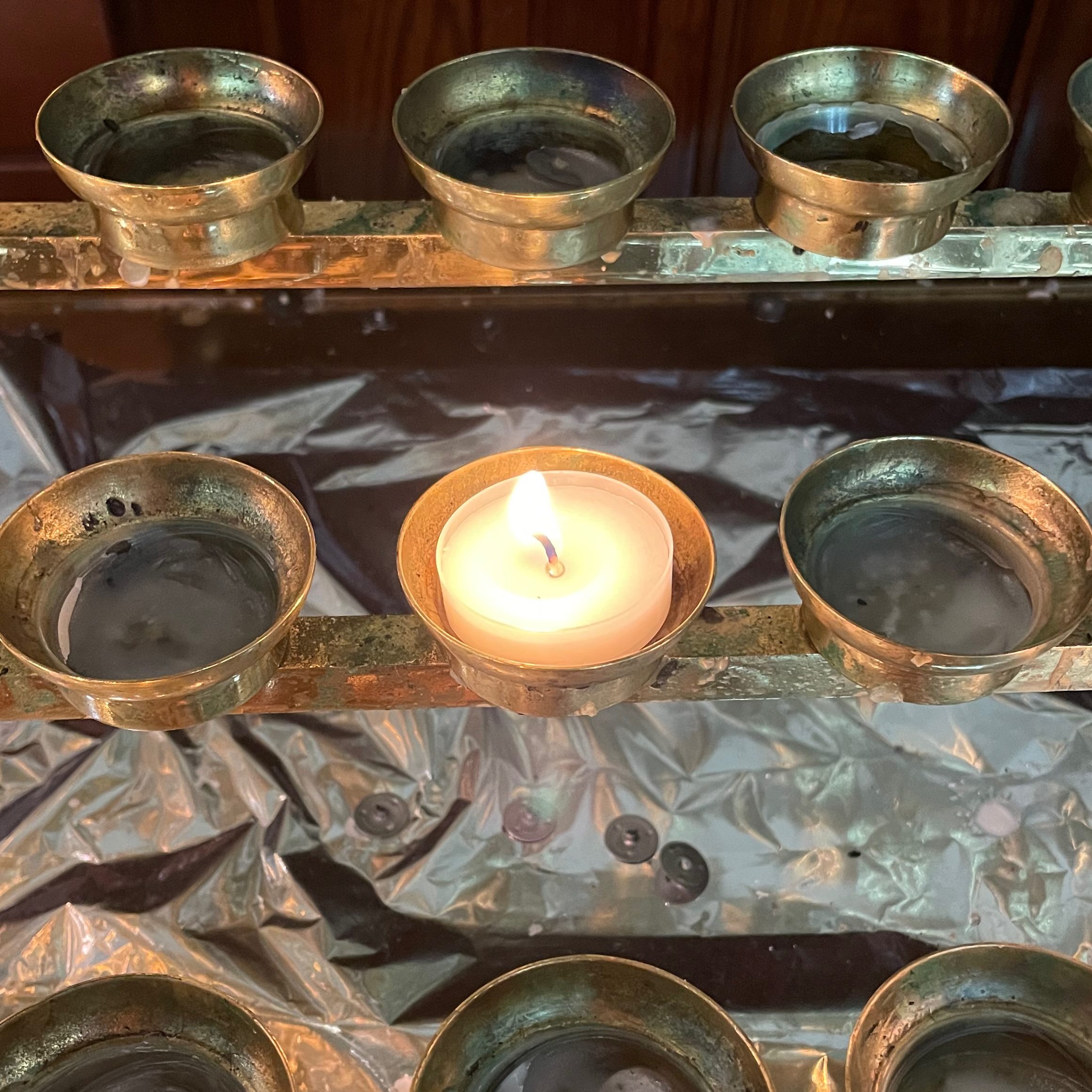
When you’ve lost trust in yourself and what you’re for, when you feel good for nothing, a useless, broken mess, not only are you cold without a blanket, you’ve dropped your candle. You are lost in the night.

You don’t see it, at first: you can’t, it’s too dark. But your people are there. They’ve picked up what you let fall, they’ve relit it, from their own flame. They’re standing there holding it for you, waiting, until you’re ready to take it back again.

And the glow of faith is yours to share, once more. Knowing that the most generous thing one human can do for another is to keep it burning.

Slowness

SportsDay
Winning at losing.

There’s a photo of me racing on school sports day, aged seven: black pumps flying, face furious with determination. Around me is a lot of empty field.

‘Ooh!’ said my Nanna, when she saw this picture. ‘Where are all the others? Did you leave them all behind?’

Aw, Nanna. Even then I knew I couldn’t do a Trump (‘Sure, sure, left ’em standing, ran so quick I won next year’s race too, yeah, truth is, I’m the fastest kid you know…’)

Nope.

I came so last there was no other kid slow enough to be in the frame. Although, if you look carefully, you can just see Shona Ferguson’s heel disappearing off the left-hand edge of the picture.

We all moan that time speeds up as we get older. But when I was small, life often felt stuck in super slo-mo.

It wasn’t just my stumpy summer-baby legs which never kept up. I was always the last to finish my work. Learning to write was torture.

‘Come on, slow coach,’ Mrs Garry used to tease, as my letters wobbled over the page, and each full stop was never the final one. All of a sudden, it’d be break time, and I watched everyone else throw down their pencils (done, already? how?) and go out to play. While I felt panic soaping me all over, that I still had so much to do. There’d never be enough time.

You can see why I always feel the ‘dead’ in deadline. And why it has felt so good to write ‘THE END’ on my latest work in progress. Even though I know it’s only the first of many, many, slow steps towards the book it might eventually become.

Yep, there’s no way around it. I am slow, and slowness isn’t cool. It’s frustrating, backwards. In our corner of the world, which values speed above all things, we’re all supposed to be hyperefficient, productive workers, rattling off the tasks, churning out projects, getting stuff done. We love quick wins, overnight successes, prodigies, shooting stars. We don’t want to wait for anything, least of all ourselves.

Creative work couldn’t give a crap about any of this. Things that need creating hang within their own time. The work takes as long as it takes, often in minute, perilous increments you can barely see. Like the ones that turn tiny buds into flaring leaves. Or a blue line on a plastic stick into a whole new person.  

The funny thing about slowness is that, if you don’t rush it, it gets faster, all by itself. Most days I sketch people on the tube, never knowing when they’re getting off. I try to get someone’s likeness in a few stops. If I manage, it’s only because every every quick line contains all the laboured, unsure, gammy ones that went before it, ever since I first picked up a pencil. Slowness teaches you there are no shortcuts. Only doing the work.

If you’re a slow coach, like me, don’t let get distracted by feeling left behind. Life is just stickier for people like us, maybe because we let more of it soak in. Take your time. It’s no-one else’s.

After all, the world wants us to notice it. Stop, for a second, and listen to the astonishing puzzle of it, your here and now.

Go slow, it says. You’re going to want to remember this.

Sober 2018

Version 2
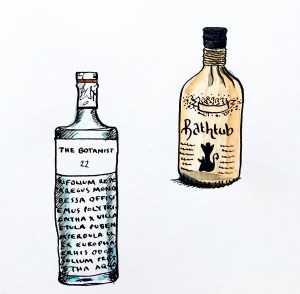
Illustrated, untasted, in 2018.

I’ve just done a year of not drinking.

This is one of the more surprising things I’ve ever typed.

It’s me, after all. All my adult life, I’ve loved a drink, loved the unbuttoning that comes with a few glasses of something delicious, the golden softness the world takes on. How generous and glowing you feel, when you spill, just a little, over your own edges. When you can expand, loosen up, become yourself, only merrier, sillier, more buoyant.

A year, people have said, incredulous that I’d even try it. Are you – sure?

The year is over, and here’s the thing. It has been so, so easy. I feel like I’ve cheated, because the willpower involved has been zero. I have wanted this year, I have needed it. It’s felt like a gift, rather than a deprivation. A lifeline that has pulled me through 2018.

It’s only exhilarating to take your foot off the brakes if you’ve never crashed the car. When you’re secure in your happiness, hey, piñata it around all you like, see what falls out. You can ride the dodgems of deep drinking like I used to, all blurred control and whiplash-collision and hilarity edging to injury, if you’re whole, and your heart beats safely behind your ribs. I’ve been too insecurely stitched together, this last little while, too afraid of what would smash, all the bits that would fall off.

The trouble, I’ve found, with trying to drown one’s sorrows, is that there is a species of sorrow that, far from drowning, turns into a kind of crazed zombie mermaid instead, all teeth and tangling hair and bony grip, pulling you down into the blackness. There’s nothing for it but to drain the wine-dark sea, and go out hunting in the mud, harpoon in hand. I don’t know if I’m rid of them yet, or if they’ll be waiting for me, regenerated, the other side of a few wines. I need a bit more time to toughen up, before I find out.

I knew not drinking would be a counter-cultural experience. In my life, it makes you someone suspicious. Someone uncomfortably dull, your weird downer (be it religion, depression, addiction, self-discipline) casting a cloud over everyone else’s good times. I decided to do all my usual socialising, only with a soda and lime in my wine hand.

If you’ve met me for the first time in 2018, I’ve probably been been a bit quieter and more thoughtful than I would have been before. I’ll have listened to you talk, more than I’ve wittered away. I’ve held the silences, let myself feel awkward, not just blurted some nonsense at you for the sake of filling in the gaps.

I’ve danced and danced, more freely than I ever thought I would, for the sheer love of it, way into the early hours, with nothing to blur the bass. I’ve done my Kate Bush special at karaoke, partied to the end at hen dos, weddings, birthdays, Big Nights Out. I’ve spent a week living and writing with strangers who became new friends. Booze is no longer the ctrl+v shortcut that pastes in FUN. (‘What’s it like,’ old mates have asked, ‘out with us lot, sober?’ And I’ve laughed, and told them the truth. ‘Exactly the same.’)

Heading home undrunk, I have looked the night tube, the darkened city, square in the face, and the clarity has been power. Writer-me has devoured the extra time to notice, to really abide with what is there. In the early hours of the morning, you see how not-ok we are. For so many of us, the need to climb out of this social reality is overpowering; we burn for escape, ascension. It needs soaking away, the tyranny of obligation, that don’t wanna-go-to-school feeling you have to squash, your own exasperated parent, every Monday morning. Too often we end up stealing from ourselves the things that we need, to get the things that we want.

This year has confirmed what I’ve suspected for a little while: booze is a shit analgesic. Like tablets you pop for a headache, with ‘may cause migraines’ among the side-effects.

On which note, a year of no hangovers has been heavenly. It’s no small thing to know weekend mornings bring only light and peace and freshness, that the dawn is innocent of last night’s consequences. That I’m able to get up on the exact same level as my daughter, full of chatter and energy, without a banging head and a revolting stomach.

Rather than making me feel more grown up, not drinking has given me back my younger self. Kids live in this reality; they are irredeemably here and now. There’s no escape route, nothing to dull the edges. No little door you drink something to fit through, and tumble into another world. You feel everything, as it happens. Time and memory don’t slip away; your experience is one continuous reel, the camera held steady, the lighting unflinchingly true. It has been a return to having to invent and then build my own ladders out of the day-to-day. Which has been, this year of muling away in the world of my book, exactly what I have needed.

I’m too much of a sensualist to be tee-total for good. But I reckon I’ll need the gifts of sober 2018 for a little longer. Whenever you see me next with a drink in hand, you’ll know. The weather in my life has changed. I’m sunny inside again: cheerful enough for mischief. Knowing I can be a bit of a rogue, without fearing the pain that waits, two glasses down. I’ll be properly seamed up, scarred, but all of a piece. Wise enough for the pleasure of nonsense; strong enough to know that true joy has nothing at all to do with what pours out of a bottle.